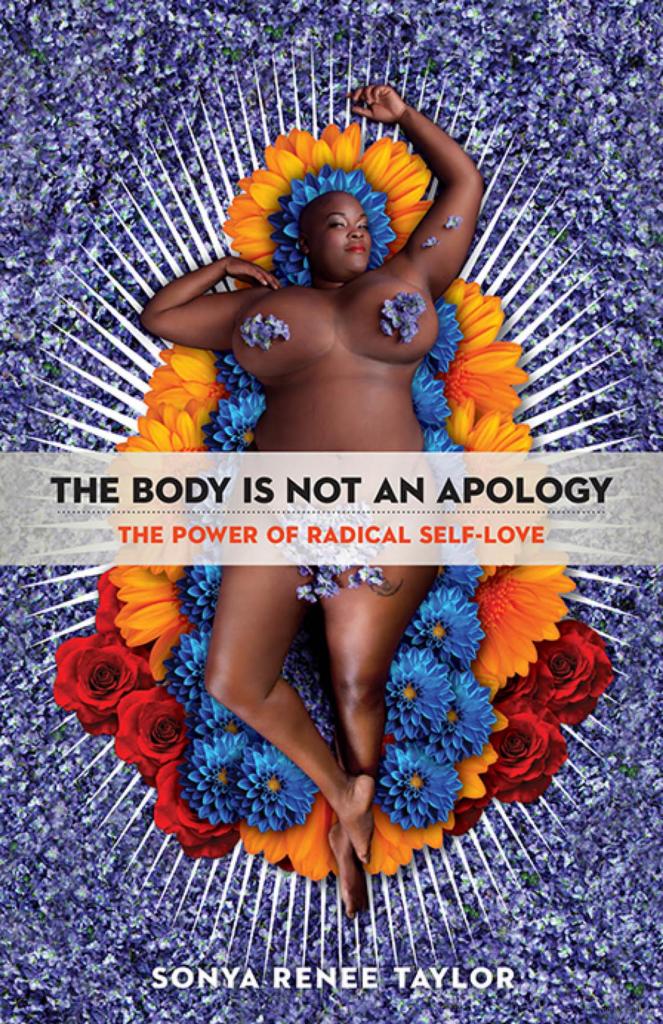
Book Review: The Body Is Not an Apology: The Power of Radical Self-Love by Sonya Renee Taylor
Welcome to my first book review. I apologize if this is messy and makes absolutely no sense. Please bear with me as I take you through the thoughts that trampled over each other at one million miles per hour. Also, what a perfect segueway: let me bare my thoughts naked to you as this book did to me while I was reading it.
First of all, how dare Sonya call me out like this! Lol
I first heard about this book while listening to Brene Browns Podcast Unlocking Us (Click here to listen to the podcast episode). I was immediately enamored by Brene Brown and Sonya Renee Taylor’s conversation. Not too long after I heard the podcast, I went to the bookstore and bought the book. In the first chapter, Sonya explicitly discusses how the book I held in my hand was not a self-help book intended to help me garner self-confidence and self-esteem. As she states, both are merely superficial and surface-level band-aid fixes for a person’s ego. No, no, no. This book was about radical self-love.
“Radical self-love is interdependent. The radical self-love espoused in this book lives beyond the flimsy ethos of individualism and operates at both the individual and systemic levels. Radical self-love is about the self because the self is part of the whole. And therefore, radical self-love is the foundation of radical human love. Our relationships with our own bodies inform our relationships with others. Consider all the times you have assessed your value or lack thereof by comparing yourself to someone else… Body shame makes us view bodies in narrow terms like ‘good’ or ‘bad’, or ‘better’ or ‘worse’ than our own. Radical self-love invites us to love our bodies in a way that transforms how we understand and accept the bodies of others.”
The Body Is Not an Apology: The Power of Radical Self-Love page 10
I remember my first overheard comment about my size when I was about six years old. I went from a medium to a large in kids. My dad told me I looked like the Elephant Man when I was around six or seven years old. In fourth and fifth grade, I started hitting puberty. I couldn’t even tell you how embarrassing it was to have a shaded line over my top lip – a mustache – barf. Or when my voice started to change a few months before my sixth-grade year. It was all very magnified because I was the oldest.
I started counting calories in fourth grade, when I was also regularly engaging in physical activity. I was average for a kid. Actually, let me change that right now because at the age I was at, I had no right to think to myself that I was fat or less than. I was perfect the way I was, but I couldn’t see it because it was masked behind the mask of perfectionism and degrading self-worth.
Throughout the book, there are Unapologetic Inquiries that encourage the reader to reflect on the dissection of the readings. For example, Unapologetic Inquiry #14 asks, “When was the last time you made a purchase because you didn’t feel ‘good enough’? Did the purchase change how you felt? If so, how and for how long?” (pg 47).
This is an interesting question, not only because I’ve skipped to show you questions one through thirteen, but also because it evokes a sense of deep introspection.
How many times have I bought a cleanser without ever really finishing one that claims to lighten scars, help prevent pimples, treat oily skin, and so on? There is something deeper here. Not only am I giving in to body shame, giving capitalism my money, but I’m giving my worth to the likes of Neutrogena, La Roche-Posay, who might want the best for my skin, but really, they want the most out of my pocket. This answer I’m giving just scratches the surface of the other reflections I had while reading this book. Like I mentioned, this was question number fourteen!
Some other points throughout the book that are highlighted are what the reader refers to as Radical Reflections. On page 49 of their book, they state Although our actions are important, we learn more about ourselves when we examine our motives. Radical self-love inquiry is less about judging ourselves for ‘what’ we do and more about compassionately asking ourselves ‘why’?
Why do I workout? Is it because I hate my body or is it because I love my body and I’m grateful for the movement it makes? When I go to the gym am I constantly comparing myself to others there or judging someone on the treadmill or thinking “why does that guy keep grunting”? Why does it matter? It matters because all those thoughts are normal to have because it’s a natural human instinct to judge (unfortunately) but what’s not normal and what has been conditioned to us by be it media, family, friends, etc., is that those thoughts have already labeled and categorized someone as “bad” or “good”, “healthy” or “not healthy”, “fat” or “skinny”.
That is what those thoughts do. Now I know I’m just touching on the physical appearance – this is something I’m working on because it is my own body shame complexity that I’ve projected – but this book goes far deeper than that.
There are 5 chapters. 130 pages. This book has counterarguments and a conclusion that ultimately reshaped my thinkings thinking.
Please, do yourself a favor and you have a little inkling about how you wish to show up in the world that is currently already so divided, read this book to help weave all the intersections of yourself together. This is just the beginning. The benefits are only visible with consistency and intention.
Follow me on Fable: The social app for bookworms and bingewatchers
 Confessions of a Compulsive Liar.